From Policy to Practice: Enforcing Genocide Education in America’s Classrooms
- (0)
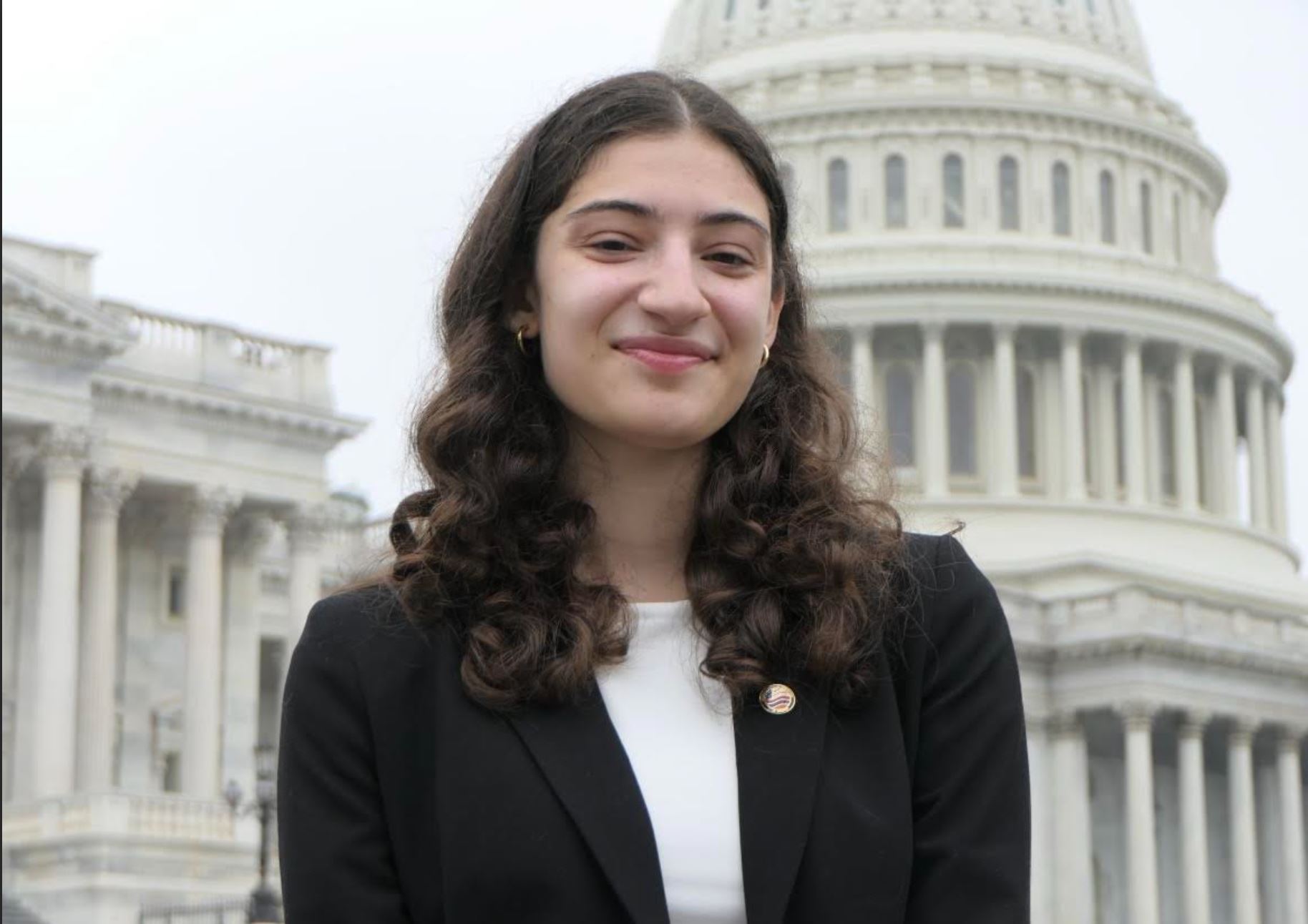
By Lori Tamzarian
ANCA Maral Melkonian Avetisyan Summer Fellow 2025
Despite growing up in Los Angeles – a county home to one of the largest Armenian diasporan communities in the world – I was often met with puzzled expressions when I mentioned being Armenian. At school, I was one of the only Armenian students. The confusion extended beyond my classmates – even teachers met me with uncertainty or held common misconceptions when I mentioned anything about Armenia.
At home, it was the opposite. My family had lively conversations about our culture and history. During our weekly visits to my grandparents’ house, my grandmother would often evocatively tell the stories of her parents – two Genocide survivors. The unimaginable horrors of what my great-grandparents and all the other victims of the Armenian Genocide endured became etched into my mind.
Feeling the weight of this untold history, I took it upon myself to educate others about the Armenian Genocide at school. It never felt like an option for me; it was something I had to do. I weaved it into every conversation I could, sharing the stories of my great grandparents and detailing the events of the Genocide to anyone willing to listen. In class, I would raise my hand and attempt to connect it to the material we were studying, write about it in as many assignments as I could, and give class presentations on it.
However, despite my efforts to raise awareness, what my peers understood of the Genocide was significantly lacking in comparison to what the state curricula was, in theory, supposed to impart upon them.
Essentially, while California has taken an important first step in passing Armenian Genocide education legislation – first in 1985 (AB 1273) and updated in 2014 (AB 1915), requiring the inclusion of the Armenian Genocide in 7th-12th grade social science curricula – in practice, the law has not been effectively enforced. This lack of enforcement in California, which has one of the largest Armenian communities and has been a pioneer in Genocide education legislation, underscores the critical need for federal legislation. The recent introduction of the Armenian Genocide Education Act (H.R.2585) by Representatives Dina Titus (D-NV), Gus Bilirakis (R-FL), Ted Lieu (D-CA), and David Valadao (R-CA), reflects this important national effort in promoting a more cohesive approach to Genocide education, highlighting the need to expand efforts to states with smaller Armenian populations and ensure consistent implementation in states like California, where legislation is already in place.
The Armenian Genocide Education Act (H.R.2585) authorizes the Library of Congress to provide educational materials on the Armenian Genocide to schools nationwide. The bill promotes teacher training and curriculum development to ensure students understand the historical facts and ongoing consequences of this crime against humanity.
But even with the passage of H.R.2585 – legislation only goes so far. Without follow up – with our school districts, with educators – to ensure they use these resources, study guides may simply be left unopened on library and history department shelves.
That’s where initiatives like the Armenian Genocide Education Project (GenEd), which aim to incorporate Armenian Genocide education into school curricula, are incredibly vital. Specifically, GenEd leads professional development workshops for teachers, delving into how they can best approach this sensitive topic, lead conversations about it in the classroom, and leave students with a deeper understanding of its long-term effects. They also provide lesson plans, making the integration of this important history more accessible and manageable for educators.
The Armenian Genocide was the first genocide of the 20th century. As such, it has served as a precursor for subsequent genocides – the Holocaust being one of them. In essence, properly teaching the Armenian Genocide in schools helps raise the critical awareness needed to prevent future genocides. As seen with the recent ethnic cleansing that took place in Artsakh, a genocide silenced and denied, is a genocide repeated.
“Who, after all, speaks today of the annihilation of the Armenians?”
~ Adolf Hitler
Federal legislation and groups like the Genocide Education Project – supported by local community advocates across the U.S. – can make sure we not only speak about the Armenian Genocide but prevent future atrocities.
*
Bio: Lori Tamzarian was born and raised in Los Angeles. She is a recent graduate of the University of California, Davis with a bachelor’s in psychology, and plans on becoming a school psychologist. Tamzarian is the 2025 ANCA Maral Melkonian Avetisyan Summer Fellow.
Related Articles

Մարտ 30, 2026