Նոյեմբեր 11, 2026
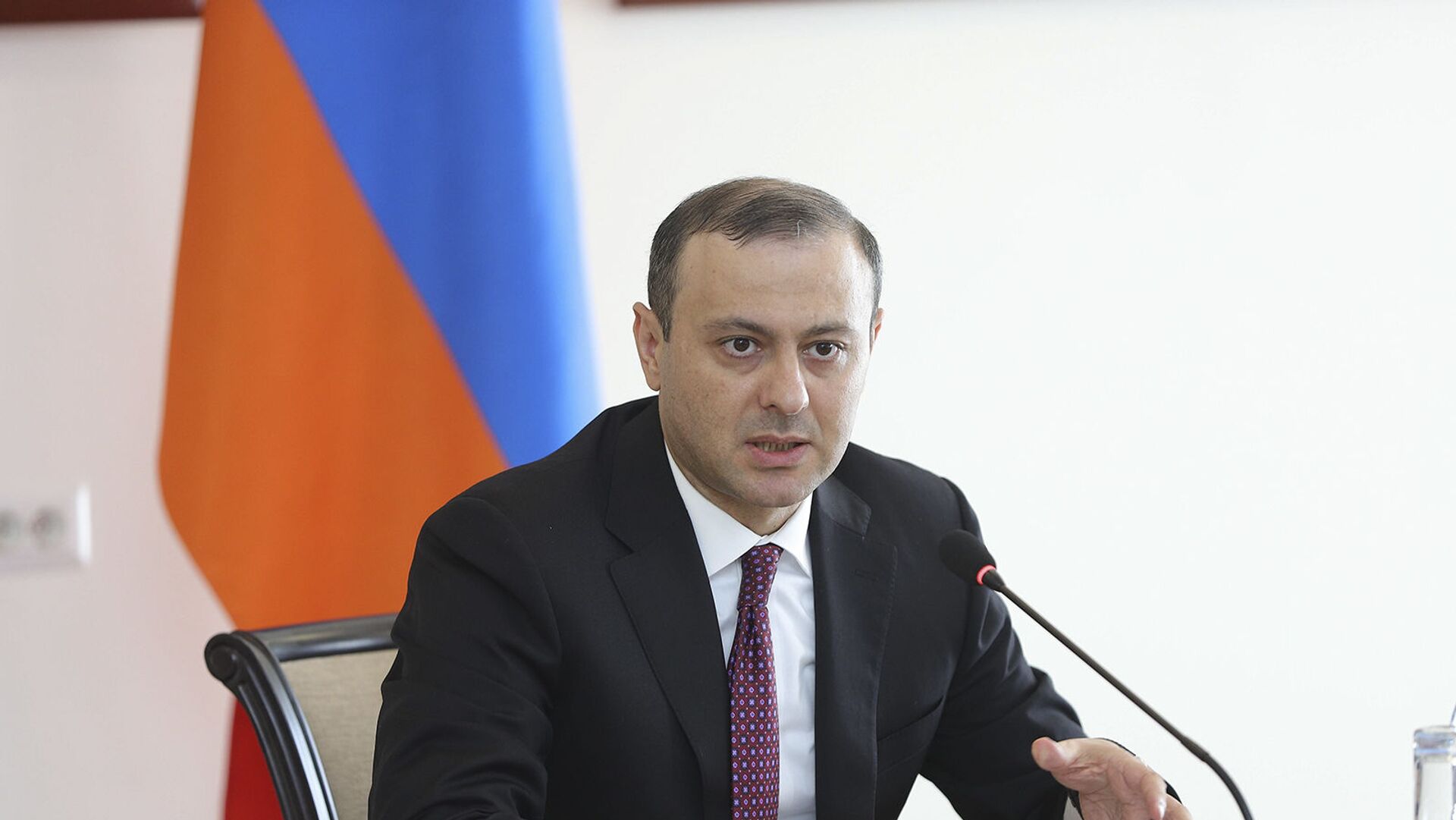
YEREVAN — Armenia’s former Security Council Secretary Armen Grigoryan has questioned the government’s pursuit of European Union membership, warning that an unrealistic accession strategy could further expose the country to Russian pressure, weaken its regional relationships and undermine its democratic development.
In an opinion article published Wednesday by MediaLab, Grigoryan, who headed Armenia’s Security Council from 2018 to 2026, argued that the country’s European aspirations must be weighed against its economic vulnerabilities, geographical realities and limited capacity to withstand external pressure.
His intervention comes as Prime Minister Nikol Pashinyan continues to promote European integration as a strategic priority. Speaking at an EU enlargement summit in Brussels on November 3, Pashinyan suggested Armenia could submit a formal membership application in 2027 or 2028.
Grigoryan disputed the feasibility of that objective, arguing that pursuing EU membership without a credible path to accession could produce consequences contrary to those intended by the government.
The former security chief drew parallels with earlier attempts by Armenia to strengthen relations with Western institutions, particularly the country’s 2013 decision to abandon an association agreement with the EU and instead join the Russia-led Customs Union.
He argued that Armenia risks repeating past mistakes by pursuing geopolitical ambitions without developing the economic and security capabilities necessary to sustain them.
Rather than reducing Moscow’s influence, Grigoryan warned, an unsuccessful accession effort could leave Yerevan more vulnerable to Russian pressure and potentially create conditions for deeper integration with Russia and Belarus.
He also pointed out that Armenia had already achieved meaningful progress in diversifying its international relationships before parliament adopted legislation launching an EU accession process in March 2025.
Among those developments were the deployment of European Union monitors along the Armenian-Azerbaijani border, expanded defence cooperation with Western partners, the withdrawal of Russian border guards from certain locations and negotiations on EU visa liberalization.
According to Grigoryan, these practical achievements demonstrate that Armenia can strengthen relations with Europe without making formal EU membership the central objective of its foreign policy.
Grigoryan also questioned how Armenia could manage the economic consequences of distancing itself from Russian-led institutions while continuing to rely heavily on Russian energy supplies and export markets.
He warned that a prolonged and uncertain accession process could weaken existing economic arrangements without providing equivalent alternatives.
Particular concern was raised over Armenia’s relationship with Iran. Grigoryan argued that closer alignment with EU sanctions policies could eventually complicate energy cooperation with Tehran, including the existing arrangement under which Armenia exchanges electricity for Iranian natural gas.
Such a development, he suggested, could undermine efforts to diversify energy supplies and inadvertently increase dependence on Russia.
He further cautioned that Armenia’s European integration agenda could create additional tensions with Iran, Turkey and Azerbaijan, making the country’s already difficult regional security environment more complicated.
Beyond foreign policy, Grigoryan challenged the government’s assertion that EU membership would necessarily strengthen democracy in Armenia.
Drawing on his experience overseeing democratic development initiatives, he argued that the country’s democratic progress has been uneven since the 2018 Velvet Revolution, with certain areas experiencing setbacks.
He warned that portraying European integration as an overriding national objective could encourage political actors and civil society organizations to overlook abuses committed by groups identified with a pro-European agenda.
Grigoryan’s remarks follow a proposal by the pro-European Republic party, headed by Aram Sargsyan, to incorporate Armenia’s EU membership aspirations into a proposed new constitution.
Despite his criticism of the accession strategy, Grigoryan emphasized that Armenia should continue developing its political, economic and security relationships with European countries and the United States.
However, he argued that foreign policy must prioritize diversification rather than replacing dependence on one geopolitical centre with dependence on another.
He advocated closer engagement with India, China, Central Asia, the Gulf countries, Japan and South Korea, alongside Armenia’s existing international partnerships.
The former Security Council Secretary maintained that Armenia’s foreign policy achievements should ultimately be judged by the country’s ability to reduce external vulnerabilities, strengthen its sovereignty and preserve independent decision-making.
His criticism highlights growing questions over the practical implications of the Pashinyan government’s European integration agenda, particularly as Armenia continues to balance its Western aspirations against its economic ties with Russia and its security interests in an increasingly complex regional environment.













Բաժանորդագրվել