
Նոյեմբեր 11, 2026
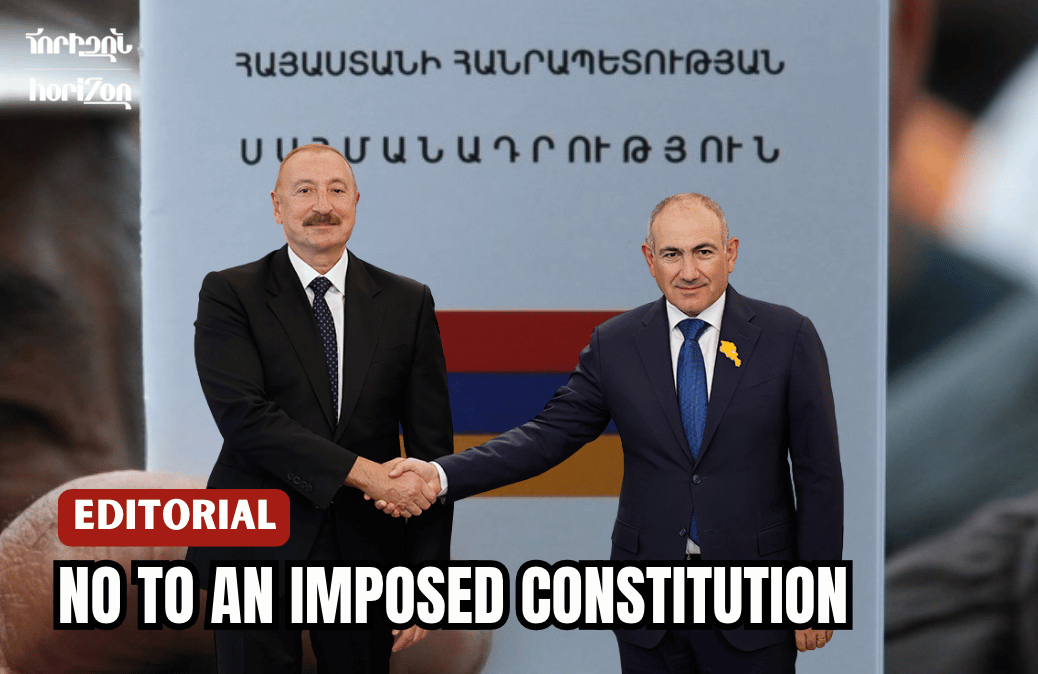
The fight over Armenia’s Constitution is more than another government-opposition clash. It is about whether the country’s founding law will reflect the free will of its people or a condition Baku dictates for signing a peace treaty.
Nikol Pashinyan insists constitutional reform is a domestic matter. Yet on November 7, he acknowledged that Ilham Aliyev will not sign a peace agreement under Armenia’s current Constitution. Both claims cannot easily stand.
In September 2024, Armenia’s Constitutional Court clarified that references to the Declaration of Independence do not automatically give all its provisions constitutional force. Only principles enshrined in the Constitution itself have that status. The reference to Artsakh therefore does not, in itself, constitute a territorial claim against Azerbaijan, a conclusion Pashinyan himself once cited to reject Baku’s accusations.
The peace agreement initialled in August 2025 already recognizes territorial integrity, renounces territorial claims and bars either party from invoking domestic law to evade its obligations. What legal problem, then, would a new Constitution solve? And what would stop Baku from demanding more?
Instead of answering, Pashinyan threatens “public pressure” against opposition parties. Article 202 requires a two-thirds parliamentary vote to initiate a constitutional referendum. His 64 seats fall short; he needs at least six opposition votes. This safeguard protects broad political consent. It is not an obstacle to be bullied away.
The opposition alliance formed on November 4, with the Armenian Revolutionary Federation among its members, is defending a principle larger than party politics: peace cannot be purchased through concessions of sovereignty in exchange for vague promises. Real peace requires secure borders, credible guarantees and answers to unresolved humanitarian issues—not the erasure of historic references.
Armenia needs reforms that strengthen judicial independence, checks on power and citizens’ rights. It does not need its supreme law rewritten under foreign pressure.
Standing firm is a democratic duty, not an obstacle to peace.
Horizon


















Բաժանորդագրվել
