Book launch to explore legacy of German general in Armenian Genocide
- (0)
The role of Germany as a military ally of the Ottoman Empire, which perpetrated the Armenian Genocide during World War I, has been marred in controversy. German officers not only participated in many war operations but also played a crucial role in organizing and structuring the Ottoman army.
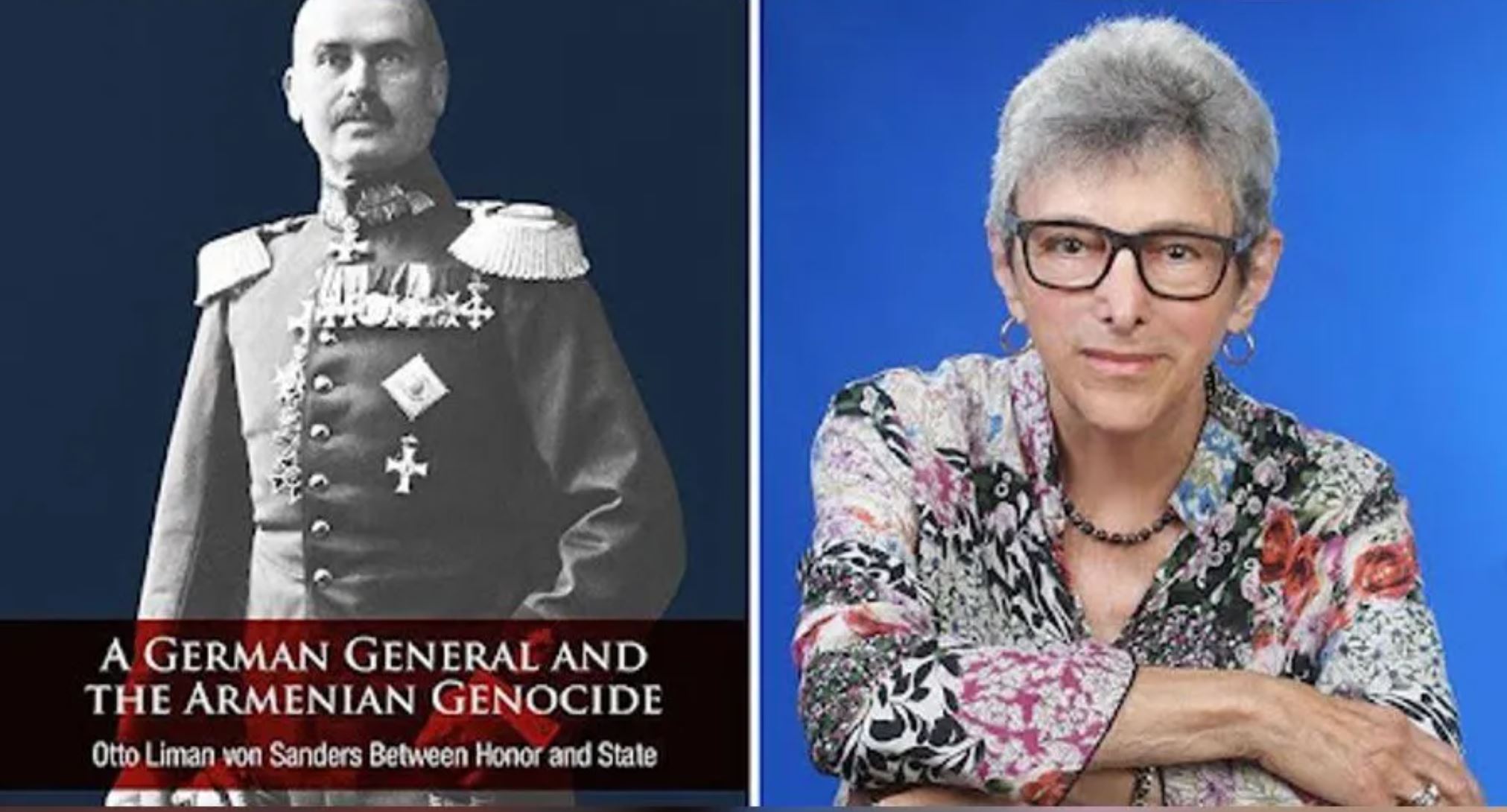
On Sunday, September 28, at 4 p.m., an event marking the release of A German General and the Armenian Genocide: Otto Liman von Sanders Between Honor and State by Muriel Mirak-Weissbach, published by Berghahn Books, will explore the legacy of this highly decorated yet controversial German military officer.
The book launch is co-sponsored by the National Association of Armenian Studies and Research, Tekeyan Cultural Association, Goethe Institute and Berghahn Books.
Muriel Mirak-Weissbach, visiting from Germany, will discuss her findings based on previously unpublished archival materials, which will shed light on Liman von Sanders’ life and career, the ethical dimensions of his role as a top German military officer and legal challenges surrounding the Armenian Genocide.
After the armistice, Liman was among many high-level German and Turkish military officers tried in Malta on charges related to the atrocities. “Who was responsible for his imprisonment? How did he gain his freedom? Why was he never officially rehabilitated? These questions became not just matters of historical justice but a personal obligation, given my family background. I wanted to set the record straight,” Mirak-Weissbach explained.
The daughter of genocide survivors whose orphaned parents were saved by compassionate Turks, Mirak-Weissbach was both dismayed and intrigued. “If this German military leader had also acted to protect Christian minorities, I wanted to know more,” she said. “Why was he not acknowledged for these interventions? Who was he really, what had he done during the war—and why?”
Her book is perhaps the first in-depth, serious biography of Liman von Sanders. It is the outcome of years of research in government, military, university and family archives—including those of Liman’s descendants. These documents helped reconstruct his life and career.
The work has received rave reviews from scholars of World War I and the Armenian Genocide. Margaret Lavinia Anderson of the University of California, Berkeley, said, “The author frames her story as an effort to salvage the reputation of this remarkable person, which she does. Her account of his repeated refusals to obey deportation orders from the Young Turk regime is well-documented, gripping and fast-paced; the behind-the-scenes drama of his imprisonment in Malta appears here for the first time. A book devoted to Liman von Sanders and his ‘honor’ is ideal to assign for upper-level classrooms, as it provokes the question: What would it take to stop genocide?”
Muriel Mirak-Weissbach, an Armenian-American, is a graduate of Wellesley College and a Fulbright scholar who completed her graduate studies at the Università degli Studi di Milano. She has published extensively on politics and culture in the Arab and Islamic world, as well as on Armenia, and has written essays on literature and philology. Her recent publications include Through the Wall of Fire: Armenia, Iraq, Palestine: From Wrath to Reconciliation (2013) and Madmen at the Helm: Pathology and Politics in the Arab Spring (2012). She serves as the Berlin correspondent for the Armenian Mirror-Spectator and is a board member of the Armenian Cultural Foundation (ACF). In 2012, she and her husband established the Mirak-Weissbach Foundation, which supports cultural, educational and social initiatives in Armenia.
The public is invited to attend the book launch on September 28 at 4 p.m. at the Armenian Cultural Foundation to meet the author. The event will be livestreamed by ACMI (Arlington Communication Media, Inc.) and a reception will follow. Copies of the book will be available for purchase at the event or through Berghahn’s website.
Related Articles
Ապրիլ 01, 2026
Armenia outlines preparations for COP17 in Yerevan
Ապրիլ 01, 2026