Azerbaijan, Turkey sign more than $500 million in major defence agreements
- (0)
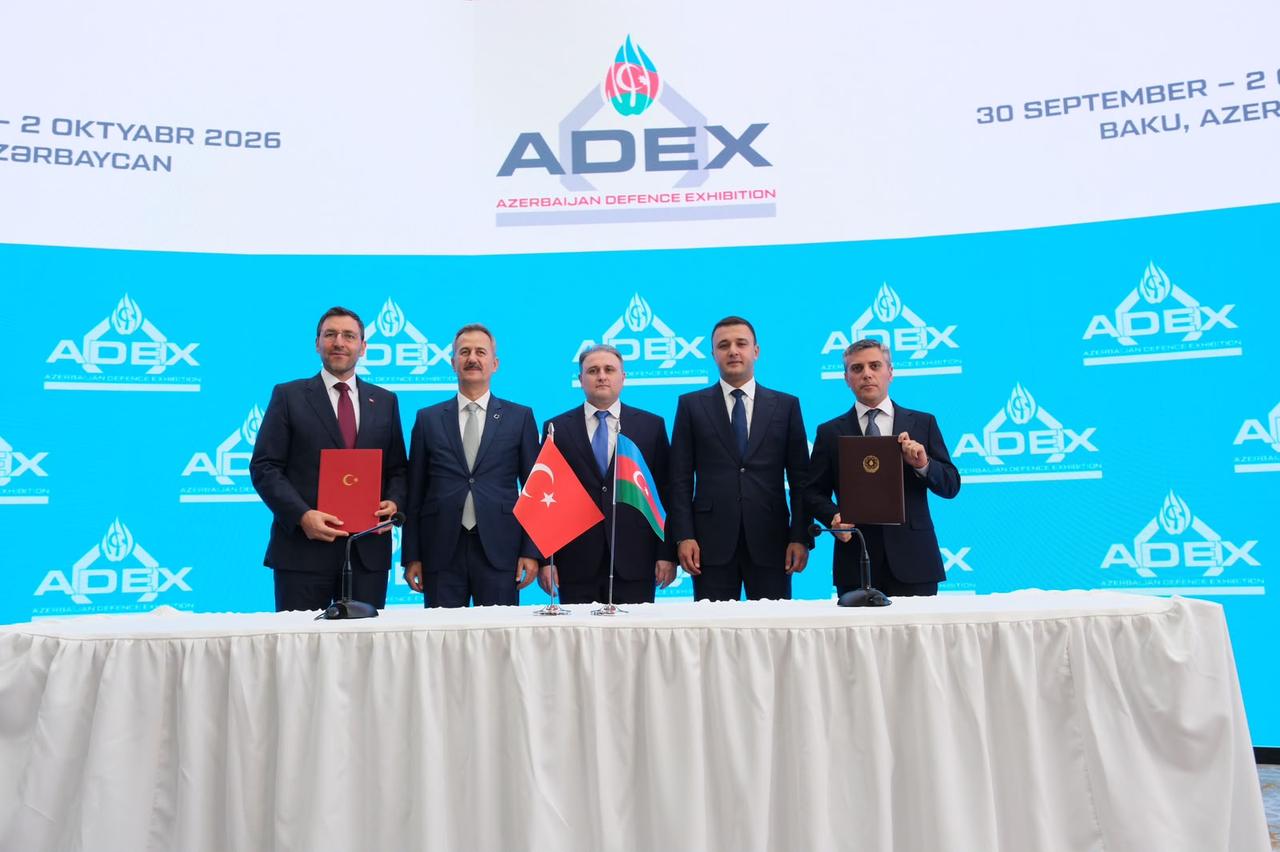
BAKU — Azerbaijan and Turkey have signed a package of defence agreements worth more than US$500 million at the ADEX 2026 defence exhibition in Baku, expanding military-industrial cooperation between the two countries across aviation, long-range strike systems, radar, electronic warfare, coastal defence and local production.
The agreements were signed on September 30 during the opening day of the sixth Azerbaijan International Defence Exhibition, which runs through October 2 at the Baku Expo Center. Turkey has the largest foreign presence at this year’s exhibition, with major defence manufacturers including ASELSAN, Baykar, Roketsan, Turkish Aerospace Industries and Havelsan participating.
Haluk Görgün, head of Turkey’s Presidency of Defence Industries, announced that the combined value of the newly signed contracts exceeds $500 million.
Among the most significant agreements is a contract for the delivery of 14 HÜRKUŞ-II aircraft manufactured by Turkish Aerospace Industries. The turboprop aircraft is designed primarily for advanced pilot training, and Görgün said deliveries to Azerbaijan are expected to begin this year.
Azerbaijan also signed a procurement agreement with Baykar for the MIZRAK intelligent loitering munition, adding a new long-range strike system to the growing inventory of Turkish-made weapons operated by the Azerbaijani armed forces.
Introduced by Baykar earlier this year, MIZRAK is designed for autonomous long-range missions and has a stated range exceeding 1,000 kilometres. The system can carry different payload configurations and incorporates navigation and electronic-protection capabilities intended to allow operations in contested environments.
Another agreement with Baykar covers ANTIDOT systems, part of an electronic-warfare architecture developed by ASELSAN that can be integrated with unmanned aerial vehicles. The technology is designed to detect, identify and locate hostile radar emissions and can provide electronic attack and jamming capabilities.
The package also includes a procurement agreement with Roketsan for the BARBAROS Coastal Defence System. The mobile system can integrate anti-ship weapons including Turkey’s ATMACA and ÇAKIR cruise missiles with surveillance, command-and-control and targeting systems. Its acquisition would primarily expand Azerbaijan’s maritime defence capabilities in the Caspian Sea.
ASELSAN, meanwhile, signed a memorandum of understanding covering the procurement of ALP-100 radar systems. The radar family is intended for air surveillance and early-warning missions and represents a further expansion of Turkish-made electronic and air-defence infrastructure within Azerbaijan’s armed forces.
The agreements extend beyond the direct purchase of military hardware.
ASELSAN and Azerbaijani company NOVASIS signed a preliminary protocol for the establishment of a factory in Nakhchivan, Azerbaijan’s exclave bordering Armenia, Turkey and Iran. Details on the products expected to be manufactured at the planned facility have not yet been publicly disclosed.
Other agreements involve Turkish defence companies Boğaziçi Savunma and Kayı Savunma and include cooperation on radio-frequency systems, partnerships and local production. Turkey’s Machinery and Chemical Industry Corporation also signed a strategic cooperation and business-development memorandum with Azerbaijan’s MIRAS, while vehicle manufacturer OTOKAR reached an agreement on logistical support cooperation.
The two countries additionally signed agreements aimed at expanding defence-sector education, research and personnel training. Turkey’s Council of Higher Education and Presidency of Defence Industries joined Azerbaijan’s ministries of Defence Industry and Science and Education in a memorandum covering higher education, scientific research, technological development and the training of specialists for the defence sector.
Another agreement involving Turkey’s Defence Industry Academy focuses on research and development, education and cooperation between universities and defence manufacturers.
Görgün said the initiatives are intended to deepen joint production and technological cooperation between the two countries, including the training of Azerbaijani and Turkish engineers.
The latest agreements further institutionalize an already extensive Turkish-Azerbaijani military partnership. Azerbaijan has in recent years acquired a growing range of Turkish-made drones, precision weapons and other military systems, while the two countries regularly conduct joint military exercises and maintain close cooperation between their armed forces.
ADEX 2026 is one of the largest defence exhibitions held in the South Caucasus. Organizers said more than 270 companies from nearly 30 countries are participating this year, with national pavilions representing 14 countries.
The scale and range of the latest Turkish-Azerbaijani agreements indicate an expansion of cooperation beyond conventional arms sales toward a more integrated defence-industrial relationship encompassing weapons procurement, electronic warfare, surveillance, training, research and development, and manufacturing inside Azerbaijan.