
Հոկտեմբեր 06, 2026
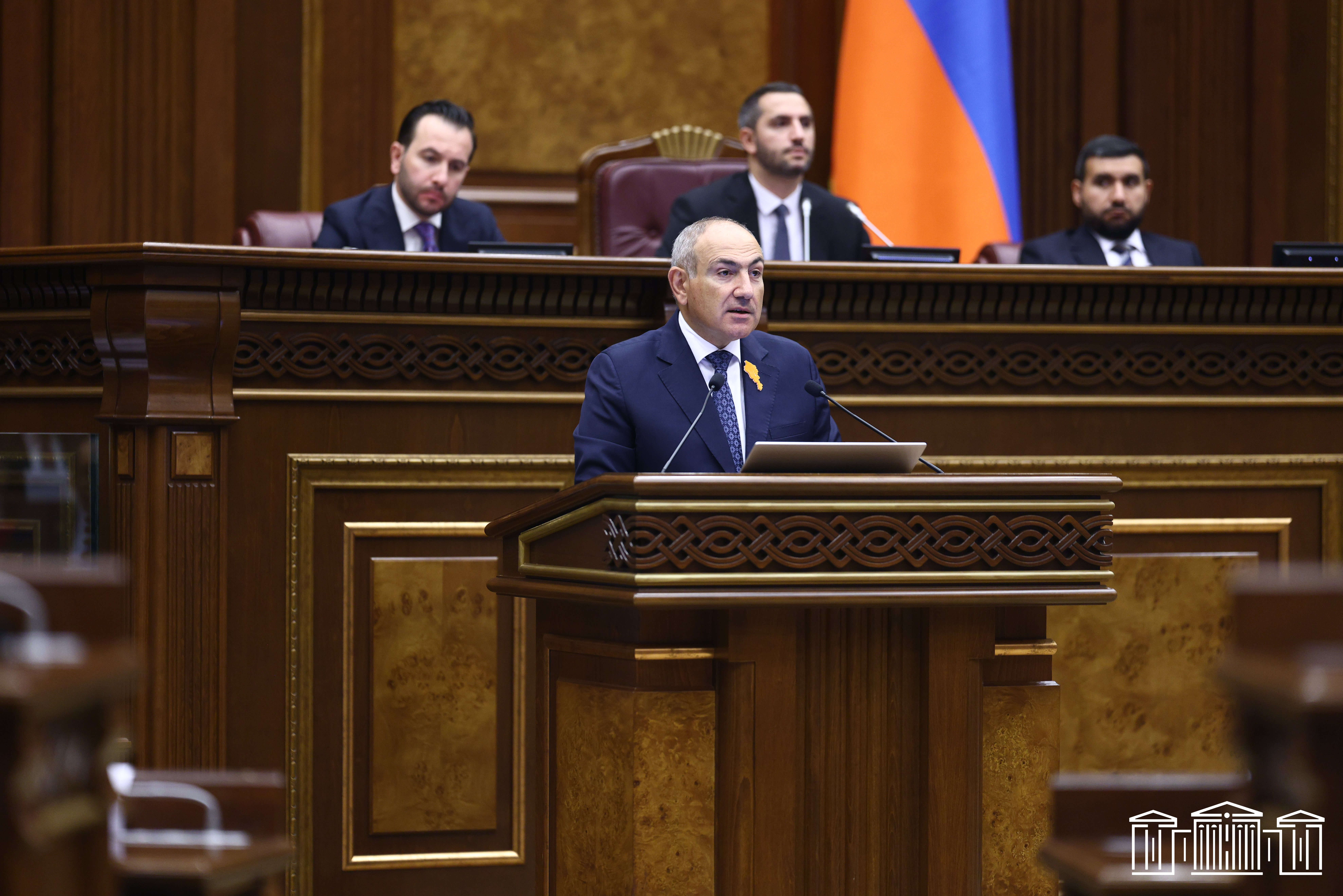
(Horizon Media / YEREVAN) — Nikol Pashinyan announced from the National Assembly podium on August 24 that Armenia will soon begin the formal process of submitting an application for membership in the European Union.
Presenting the government’s 2026–2031 five-year program, Pashinyan said he considers it appropriate to hold a referendum on EU membership once Armenia has formally applied to the European Union, received an official response and obtained a clear roadmap for the accession process.
He also addressed the call by leaders of Eurasian Economic Union member states for Yerevan to clarify its choice between pursuing EU membership and remaining in the EAEU. Pashinyan described the approach as a “friendly gesture,” stressing that a referendum remains on the agenda, but that its timing should depend on substantive developments in the accession process.
During his speech, Pashinyan again referred to his government’s so-called concept of a “Fourth Republic,” claiming that the idea received public endorsement through the results of the June 7 parliamentary elections. He also said a draft of a new Constitution will be published in the coming months.
According to Pashinyan, the new Constitution should not contain a reference to Armenia’s 1990 Declaration of Independence. He linked the position to his government’s policy of “ending” the Karabakh Movement and moving away from what he described as the logic of conflict.
Pashinyan also addressed the TRIPP project, saying it is intended not only to establish a direct railway connection between Armenia and Azerbaijan, but also to integrate Armenia into the international railway network. He said the project could facilitate a Persian Gulf–Black Sea railway connection and provide Armenia with rail links to Iran, Russia and Central Asia. Pashinyan stressed that TRIPP does not envisage any foreign military or armed presence.
In this context, he called on the Russian authorities to show flexibility regarding the management of Armenia’s railway system. Pashinyan said the current Russian management of the railways, amid Western sanctions against Russia, could discourage international investors and freight operators. He proposed discussing the possibility of transferring the railway concession rights to a third country acceptable to both Armenia and Russia.
Turning to Armenians held captive in Azerbaijan, Pashinyan said efforts to secure their release and return to Armenia remain on the government’s working agenda.
He also reaffirmed that international recognition of the Armenian Genocide will no longer be a priority of Armenia’s foreign policy. Pashinyan argued that international actors at times use the issue of Genocide recognition to advance their own political interests, to Armenia’s detriment.
Debate on the government’s five-year program continues in the National Assembly.














Բաժանորդագրվել