
Մարտ 23, 2026
By Horizon Staff Writer
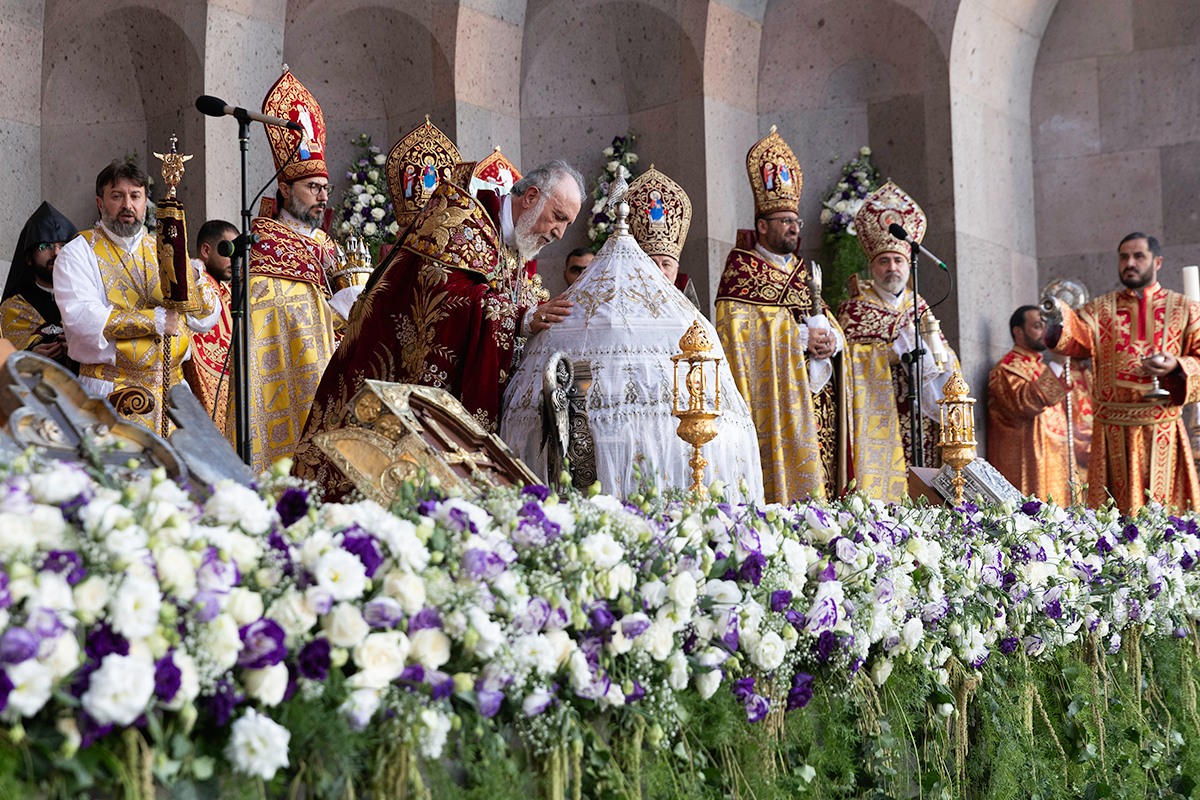
At a moment when Armenia is still reeling from historic losses, forced concessions, and a humiliating erosion of state sovereignty, the government of Nikol Pashinyan is intensifying its attack on the one national institution that has carried the Armenian nation through statelessness, genocide, dispersion, and exile. The Armenian Apostolic Church is not merely a religious body. It is the vessel of national memory, the guardian of spiritual continuity, and the institution that preserved Armenian identity when no political state existed. To target the Church and to personally denigrate the Catholicos of All Armenians, Karekin II, is not political reform. It is a direct blow to the soul of the Armenian people.
Rather than strengthening Armenia in the aftermath of disaster, the current government seems determined to dismantle every foundational pillar that has held the Armenian world together. The Church, with all its imperfections, remains one of the few surviving structures of collective dignity, moral authority, and historic legitimacy. The Prime Ministers campaign of accusations, pressure, and interference is not only unbecoming of national leadership but profoundly dangerous to the spiritual and cultural fabric of the Armenian people.
For centuries, foreign empires sought to break Armenia by severing the bond between people, faith, and heritage. They understood that an Armenian deprived of the Church is an Armenian unmoored and vulnerable. Tragically, this logic appears to animate Pashinyans present agenda. In the face of unprecedented geopolitical subservience, the loss of Artsakh, the abandonment of national priorities, and the hollowing out of Armenias strategic posture, the government now aims to weaken the one institution not under its control. And rather than accept responsibility for national defeats, it redirects blame toward the Church, as if destroying it might hide the state leaderships failures.
The attacks leveled against the Catholicos represent a new low in Armenian political life. They degrade not only the dignity of his office but the dignity of the nation. Reckless allegations thrown into the public sphere reveal a leadership more interested in humiliation than in rebuilding the countrys shattered security. The Catholicos requires no immunity from criticism, but he and the Church deserve respect, independence, and moral seriousness.
The consequences of this crisis extend far beyond Vagharshapat. A fractured Church means a fractured diaspora. A loss of public respect for the Mother See reverberates across Toronto, Paris, Beirut, Fresno, and Buenos Aires, wherever Armenians look to Etchmiadzin for anchoring and connection. Weakening the Church today may grant the government a short term political advantage, but it will inflict generational damage on the nations cultural resilience.
At a time when Armenia desperately needs unity and principled leadership, the government has chosen division and character assassination. While the country faces existential threats, its leaders pursue internal vendettas. While hostile neighbours reshape Armenia’s security landscape, the government undermines the only institution that has consistently stood firm against the tide of domination.
The Armenian Church has survived empires, exile, and ideological warfare. It will survive this government as well. The real question is whether the Armenian state, weakened politically, stripped of territorial integrity, and drifting morally, will survive the consequences of a leadership intent on uprooting its own national foundations.
This is not simply a dispute between a prime minister and a Catholicos. It is a defining struggle over what remains of the Armenian soul.















Բաժանորդագրվել

